
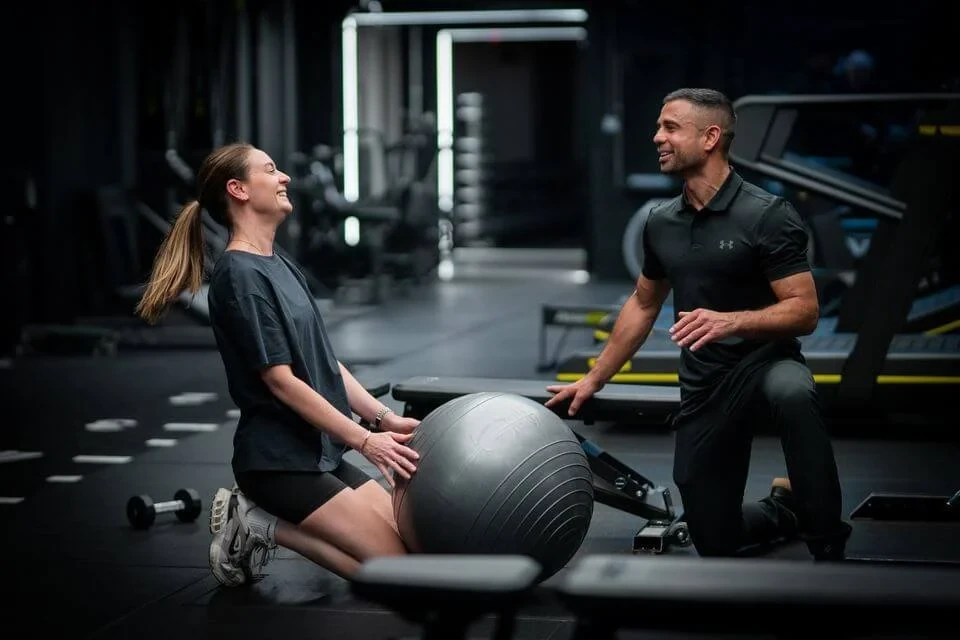
Specialist expertise, made clear before the first appointment.
Impact Physio helps combat athletes, climbers and active people return to performance. Charlie Brahmbhatt already had the clinical depth — the website needed to show it, calmly and clearly, without looking like every other clinic.
01 The starting point
Deep expertise that needed to read as deep expertise online.
Charlie Brahmbhatt is not a general practitioner of aches and pains. He holds an MSc in Sports Medicine, Exercise and Rehabilitation from UCL, has more than fifteen years in practice, and competed as an England international boxer. He works with combat athletes, climbers and active people who care less about a quick fix and more about returning to performance without the injury coming back.
There was no broken website to rescue — the gap was subtler, and common among genuine specialists. The knowledge lived in Charlie’s head and in the room with patients. Online, it risked reading like general physiotherapy: the same treatments list a hundred other clinics publish. Specialist value is easy to lose the moment it is flattened into a menu. The starting question was simple. How do you make fifteen years of clinical judgement legible to someone who has thirty seconds and a sore shoulder?
02 The real challenge
Organising real depth without crowding it.
The challenge was organisation, not addition. The practice already had the raw material: broad clinical experience, a defined treatment philosophy, upper-limb and post-surgical specialisms, objective testing with force plates and dynamometry, and a long list of legitimate patient questions.
Left unstructured, that depth becomes a wall of text. The risk with an expert clinic is a website that is comprehensive and unreadable — every service explained, nothing prioritised, and a patient who leaves before they find the one line that was written for them. The work was to hold all of that expertise without crowding it, and to sequence it so the right person feels recognised early.
Discovery
“The website needed to feel as considered as the care behind it.”
Before any design, the project began with understanding — Charlie, the practice, the patients, and the specific worlds he works in: the pressure of returning to a training block, the grip and shoulder demands of climbing, the uncertainty that follows surgery. Just as important was what Charlie did not want: no predictable medical template, no cold clinical tone, no shallow wellness language, no aggressive sales messaging.
03 Positioning before design
Bring the specialist audience forward.
The most important decision was made before a single section was styled. The homepage now opens by naming exactly who it is for — specialist physiotherapy for active individuals, specialising in combat athletes and climbers — rather than leading with a generic promise to treat aches and pains.
That single shift changes who feels spoken to. A boxer, a jiu-jitsu competitor or a climber reads the first line and recognises themselves. Positioning like this is a trade: you speak to fewer people, and the right people trust you faster.
04 Creating the message
Expertise, turned into language a patient can act on.
Charlie’s knowledge was drawn out through a detailed onboarding process, then shaped into the words on the page. The clearest example is the practice’s own principle — four words that carry the entire philosophy and give the site a spine.
Assess. Don’t guess.
From there, the homepage names the patient’s state of mind before it names a service — “you’re not just dealing with pain, you’re dealing with compromised performance” — and resolves the worry into a process rather than a sales pitch.
Deep Assessment
A detailed assessment to understand the root of the problem: conversation, physical examination, movement analysis and strength testing.
Build the Plan
A structured rehabilitation plan based on exactly what the assessment found — matched to the patient’s goals, not a template.
Intentional Treatment
Treatment based on evidence, experience and assessment, with hands-on therapy used alongside exercise where it adds value.
05 A design system built around clarity
Restraint is what makes it read as expert.
The design was built as a system, not a set of pages. Large, confident headings let a single idea land; body copy is sized and spaced for reading rather than skimming. Generous whitespace surrounds the clinical content so detailed information never feels heavy — expertise given room to breathe.
Sections alternate between light and dark for pacing, not decoration: each shift separates one idea from the next, gives weight to the moments that matter, and keeps a long, content-rich page from ever feeling flat. Colour is held back to near-monochrome with a single restrained accent, so nothing competes with the clinician and the message.
06 Building the patient journey
Sequenced around how an anxious patient actually decides.
First a visitor sees who the practice is for and recognises their sport or situation. Then they meet the assessment-led approach and the clinician behind it. They understand the process, and are reassured by proof and by answers to their practical worries. Only then are they asked to act. Nothing on the page requires effort to understand what Impact Physio does, who it helps, what makes it different, and what to do next.
07 Content that answers real concerns
The questions patients carry before they book.
Written once the wider messaging was settled, so it could speak in the practice’s finished voice. Answers were organised for readability rather than trimmed to make the page shorter — and the structured content gives search engines and AI systems clearer context about the practice, its services and the patients it supports.
Usually not. A thorough clinical assessment is the best place to start, and imaging is only recommended when it will genuinely change the plan.
In many cases, no. Where possible, treatment is designed to keep you moving, using modifications rather than complete rest.
It depends on the injury and your goals. After the initial assessment you receive a realistic estimate rather than an open-ended commitment.
Yes, where it adds value — always alongside exercise and rehabilitation, never as a treatment on its own.
Yes to both. Post-operative shoulder rehabilitation is a core specialism, and recurring or long-standing problems are often where a detailed, assessment-led approach makes the biggest difference.
Yes. Objective performance testing, including force-plate analysis and dynamometry, gives clear benchmarks so progress can be tracked rather than guessed.
08 Proof, experience and trust

Credibility built from substance, not adjectives.
Charlie’s experience is stated plainly — an MSc in Sports Medicine from UCL, fifteen-plus years in practice, and a background as an England international boxer that shaped how he thinks about returning to performance.
The specialist services are explained in enough detail to signal genuine depth: post-operative shoulder rehabilitation with clear milestones, upper-limb care suited to boxers and combat athletes, and objective performance testing using force-plate analysis and dynamometry. Patient reviews and external validation, including Doctify, are surfaced where they reassure rather than interrupt.
09 Designed for every screen, on a clean foundation
Mobile was designed, not inherited.
Most patients meet Impact Physio first on a phone, often one-handed and often in discomfort — so the small screen got its own decisions. The hero video carries energy on mobile without hurting load or legibility; headlines were scaled to stay impactful without wrapping awkwardly; spacing and reading order keep a long page calm; and tap targets and the booking action stay within easy reach. Squarespace gives you a responsive starting point — not a considered one.
A solid build under the design.
Underneath the visible work sits a clean foundation: logical, descriptive heading structure; optimised images with meaningful alt text; an enquiry flow tested end-to-end; the domain connected and the practice’s email set up on it; and SEO groundwork and cross-screen checks before launch. None of it is glamorous, and that is the point — it is what lets the design do its job reliably.
The finished experience
See the website in context.
The clearest way to judge the work is to move through it — the moving hero, the pacing, and the way the page guides you from recognition to booking.
In the client’s words
Coming soon.
Charlie Brahmbhatt
Founder, Impact Physio
Project reflection
The strongest part isn’t any single screen.
The hero video gets attention, but it isn’t the reason the site works. The strongest part of the finished work is how the parts hold together — positioning, content, design and journey all pointing the same way. Specialist expertise, made clear. A calm page for people who arrive worried. A first impression that matches the standard of the care. When those things align, a website stops being a brochure and starts doing quiet, useful work before anyone picks up the phone.
More Work
View All ProjectsFor established practices
Your expertise should be clear before the first conversation.
If your website makes your practice look like everyone else’s, the problem usually isn’t your work — it’s how it’s presented. Let’s talk about yours.